Nikolje Monastery
One of the oldest monasteries in the Ovčar-Kablar Gorge, with a rich history spanning from the 13th century, royal patronage, and rare medieval manuscripts.
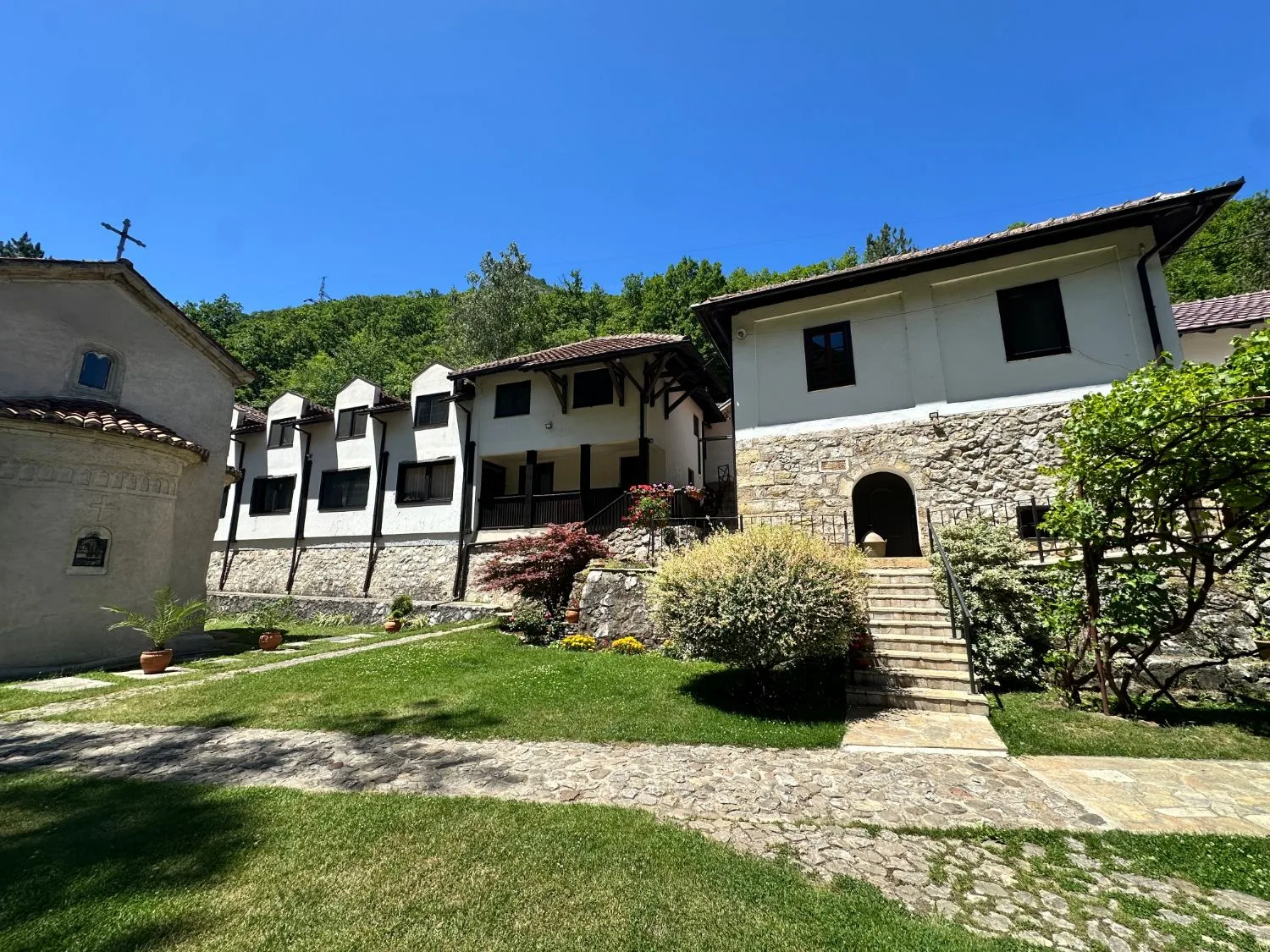
Nikolje Monastery is one of the oldest monasteries in the Ovčar-Kablar Gorge. It stands on the left bank of the Western Morava river, in the village of Rošci near Ovčar Banja, at the foot of Mount Kablar. According to one tradition, it was founded by Athonite monks who fled Mount Athos during the Catalan invasions in the 13th century; another holds that it was built by hesychasts from Sinai following the Battle of Maritsa in 1371. The earliest written record dates from Ottoman tax registers of 1489.
When the construction of a dam flooded Jovanje Monastery in 1954, its nuns relocated to Nikolje, which has since remained a women's monastery. Despite being damaged on multiple occasions, the local community continually restored it — the monastery candle was never extinguished.
Two exceptional manuscript books survive from the monastery's rich scribal tradition. The Nikolje Gospel, the oldest of the two, was written in the Serbian recension on parchment in the 15th century and richly illuminated; it is now preserved in Dublin, Ireland. The Karan Gospel was written by the priest Vuk in 1608 at the White Church in Karan — a unique example of Islamic artistic influence on Serbian manuscript decoration.
A particularly significant place in the monastery's history belongs to the konak (quarters) built by Prince Miloš Obrenović in 1817. He sheltered his family here following the collapse of the First Serbian Uprising, directed the Second Serbian Uprising from this location for a time, and buried his five-year-old son Petar within the monastery grounds.
The monastery treasury holds relics of Saint Nicholas the Wonderworker, brought from Mount Athos, as well as relics of Saint Nicodemus, Archbishop of Peć from the 14th century. In the monastery courtyard stands a centuries-old pine tree which, according to tradition, was planted over the graves of monks and is believed to carry healing power for pilgrims.
The main church is a single-nave structure without a dome, dedicated to Saint Nicholas of Myra (feast day December 19). The frescoes in the naos were completed in 1857, while the narthex was painted in 1637 by the hieromonk Matej. The iconostasis was created between 1826 and 1829 under the patronage of Prince Miloš, and the icons are attributed to the iconographer Janko Mihailović Moler from Negrišor.